Euroglobal New
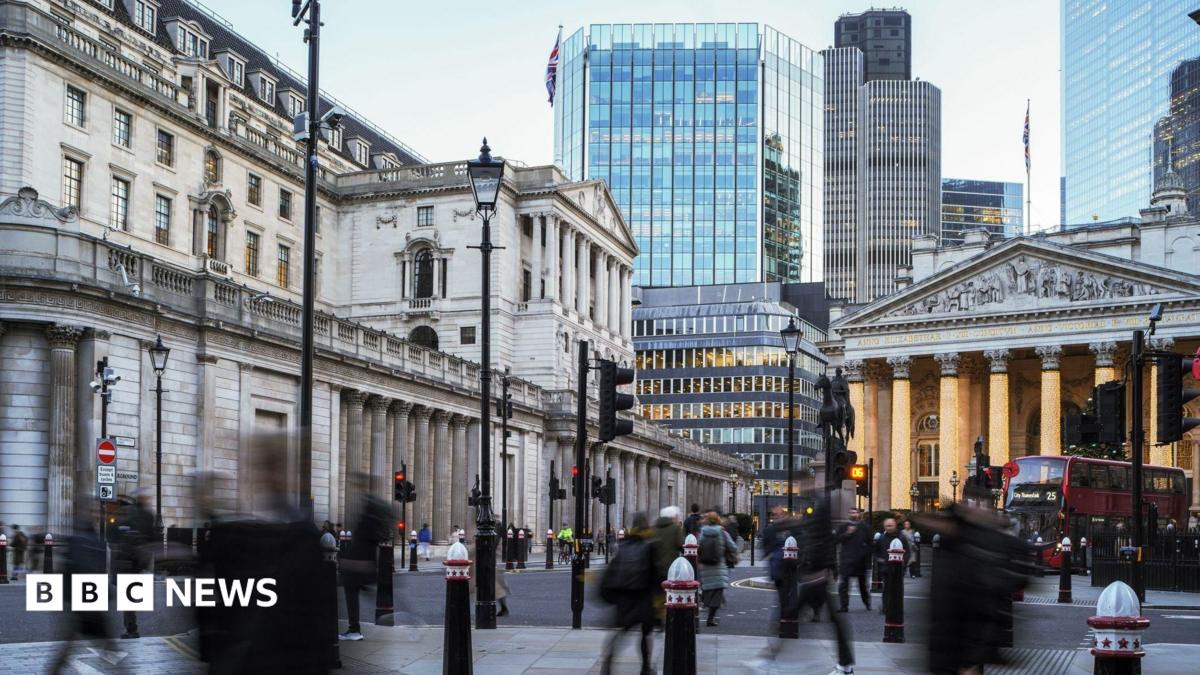
The Bank has thrown a tentative first dart. There is potentially another to come published at 12:52 GMT Faisal Islam Economics editor High and rising inflation risks a further cycle of self-fulfilling expectations of rising prices. It hasn’t been seen so far, however.
The Iran war has lasted for nine months, and led to oil prices used in the forecast averaging $108 a barrel. And yet, as Bank announces the rate rise, the oil price is actually 13% lower than that - having fallen in the run-up to and after the US midterm elections, reflecting expectations or guesses that President Trump will deescalate the conflict. The other notable factor is that the UK economy is performing much better than forecasts and expectations.
This is underlined by the Bank of England today. Growth has been 0.6%, and 0.5% in the first two quarters. It is heading for 0.7%, the Bank says, in the third quarter, before slowing in the current quarter.
Unemployment has stabilised, actually falling a little. Some of this has fed through into a better performing currency, with sterling now at its highest level since the Brexit referendum, when measured against a basket of currencies. This can help rein in inflation by making imports cheaper.
So, this is an unusual type of uncertainty. Even the expected further rise, probably in February next year is conditional on the war continuing. The Bank of England stopped waiting for President Trump’s war to end today, but perhaps yesterday's blue wave will stop the inflationary wave.
The Bank has thrown a tentative first dart, and there is potentially another to come. How many more rises can we expect? The committee is split published at 12:47 GMT Faisal Islam Economics editor The Bank of England’s rise in rates is like throwing darts at a board that constantly moves around the wall, as expectations of the Iran War lurch from day to day.
Inflation is heading higher to just under 5% in spring next year as the energy price cap surges by 27% in January to £2,150 a year for a typical household. So the Bank has raised the interest rate today to 4% and indicated there is more to come. The question is: How many more rises?
There is a split on the committee here. Three of the members of the committee refer to “rises” plural. One member today voted for a rise to 4.25%.
Three refer to just one more, including the governor Andrew Bailey. My read on this is that the expectation is for one more rise in February. Two and done - but it depends.
It is painful for those on variable mortgages, but should not be seen yet as a cycle of hikes. Why have they raised now? I'll discuss this in the next post.
There will be some nervousness in government that rates could rise again published at 12:45 GMT Jack Fenwick Political correspondent While this is a decision clearly driven by international events, it’s still not easy for the government. Interest rates are an issue that Labour ministers repeatedly turn to whenever they’re asked tough questions about their handling of the economy. They often remind us that the Bank of England has cut interest rates six times since Labour came to power in 2024.
Ministers have sometimes even referred to those cuts as being “consecutive”, though the Bank has also chosen to hold rates several times since the last general election. But a first interest rates rise is a significant moment for any government. No doubt ministers will point to rates still being lower than they were at the 2024 election - but with expectations that they could rise again, there will be some nervousness.
In the past they have tried to use interest rate cuts as evidence of the government's sound economic handling - that's likely to be more difficult now there's been an interest rate rise. Iran conflict likely to see inflation rise to about 5% in 2027 - BoE governor published at 12:37 GMT Image source, PA Media Bailey starts by noting the Middle East conflict has been going on for nine months, and has pushed up inflation in every advanced economy, including the UK. He says the war's economic impact here is likely to see inflation rise to around 5% next year.
"We need to act to limit the impact of that," he says, noting the Bank's decision to raise rates. Governor Bailey and colleagues holding press conference - watch live published at 12:33 GMT Michael Race Business and economics reporter I'm in the room where Bank of England governor Andrew Bailey and his colleagues are holding a press conference on their decision to raise interest rates. Expect a lot of questions about how the Bank views the situation in the Middle East impacting the UK going forward.
You can watch it unfold live in the stream at the top of the page. 'Under Labour inflation is up,' shadow chancellor says published at 12:31 GMT Image source, Jeff Overs/BBC Shadow chancellor Andrew Griffith claims the rise in interest rates is down to inflation increasing under Labour. In a statement he says Labour "inherited inflation that was bang on target", adding that while inflation has gone up around the world, Britain is "particularly vulnerable". He says the price of the weekly shop has increased because of Labour's "£25 billion pound jobs tax" - seemingly a reference to the rise in employers' National Insurance contributions under Keir Starmer.
"Last week's Budget was a missed opportunity to tackle these issues and so much more," Griffith says. Chancellor says Iran war 'reaching deep into pockets of families and businesses' published at 12:23 GMT Image source, PA Media Chancellor John Healey, who delivered his first Budget just over a week ago, says that the impact of the Iran conflict "is reaching deep into the pockets of families and businesses here at home". “In my Budget I acted to give some breathing space to families and businesses.
Twenty million households will get a £100 energy payment, I extended the tax cut on electricity bills and froze fuel duty," he says following the announcement of the Bank rate rise. “I also set out the course ahead to get costs down for good. That includes big changes to our energy system so Britain is better protected from global shocks in the future.” Rate-setting committee backed rate rise unanimously published at 12:17 GMT Michael Race Business and economics reporter Image source, EPA The Bank's rate-setting committee have all backed increasing interest rates, with eight out of nine policymakers voting in favour of 0.25 percentage-point rise, while one member wanted to see rates raised to 4.25%.
Governor Andrew Bailey says the rate hike was warranted due to higher energy prices, but was keen to stress it was not the start of cycle of rate rises. However, the governor pointed to what happens in the Middle East conflict as the main factor in deciding rates going forward. "Put simply, it requires real progress towards settling the conflict in the Middle East," he says.
Bailey adds he could "see the argument" for a further rate hike, before taking a "more conditional approach, dependent on the evidence on energy prices and inflation dynamics". But members of the rate-setting committee offer different views on the path forward. Clare Lombardelli agrees there is "likely to be a case for a further increase in rates in the near term", but Megan Greene suggests "additional hikes will likely be required", though says any decision would depend on the impact of inflation on wages, prices and the jobs market.
Alan Taylor adds the rate rise is "a risk-management 'one-for-now' insurance hike". Further rate rise likely unless Iran war resolved, BoE says published at 12:05 GMT Breaking Michael Race Business and economics reporter Interest rates have been raised for the first time in more than three years and a further increase is likely in the coming months unless the US-Iran is resolved, the Bank of England says. Rates have been increased to 4% - from 3.75% - in a bid to curb rising prices mainly caused by the conflict between the US and Iran fuelling higher oil prices.
Andrew Bailey, the Bank's governor, says the decision "shouldn't be seen as the first in an inevitably long sequence of hikes", but warns "unless the conflict in the Middle East is resolved, neither does it seem likely to be the last increase". Bank of England raises interest rates to 4% published at 12:00 GMT Breaking The Bank of England has hiked interest rates for the first time in more than three years as it attempts to curb rising prices. Rates have risen to 4% from 3.75% in a decision that was widely expected as petrol and diesel prices fuel inflation.
The increase will push up the cost of borrowing money for things such as mortgages, loans and credit cards. But the move can offer a boost to savers, pushing up the rate offered as a return on savings. Bank of England to announce decision on interest rates published at 11:56 GMT In just five minutes' time, the Bank of England will announce its latest decision on interest rates.
Most analysts are expecting the rate to rise from 3.75%, but all will be revealed at midday. Stick with us for the latest news and analysis on what this means for your money. Rates decision comes soon after chancellor's 'breathing space' Budget published at 11:55 GMT Image source, PA Media Delivering his Budget, Chancellor John Healey warned the UK faces "real challenges ahead" as he outlined a Budget he repeatedly said would be built on "fiscal discipline".
In his Budget speech, Healey said this would see the government spend less on debt and more on "British people" - announcing policies to give "breathing space", including £100 to help with soaring energy bills for some households. However, Abhijay Sood, senior economist, the New Economics Foundation, said last week: “While the cost-of-living measures announced in [the] Budget will provide some relief to households, they’ll do very little to bring down inflation. "The government’s current reliance on the Bank of England to control inflation with interest rates alone is limited, hurting households and our economy." Pound at its strongest since Brexit referendum - it may help rein in inflation published at 11:51 GMT Faisal Islam Economics editor The pound has now hit its highest overall level since June 23rd 2016 , the day of the Brexit referendum over a decade ago.
Sterling rose notably in recent weeks, against the euro especially and the US dollar this year, and ahead of an expected rise in interest rates. The most-watched measure of the value of the British currency against a basket of 18 of the world’s main currencies last night reached its highest level since the referendum day, according to Bank of England figures. The value of sterling fell significantly after the Brexit referendum in June 2016, and reached similar lows during the process, the Covid pandemic and the Truss mini-Budget.
Some traders said the UK was being seen in a different light given relative political stability, solid growth and the rapprochement with the European Union. Sterling has responded strongly to Brexit developments and political uncertainty in recent years. The economist and former Treasury minister Jim O’Neill said: “I’m not surprised.
People were, and to a lesser extent, are underestimating the improving momentum in the UK." A stronger pound can help rein in inflation, and increase purchasing power for consumers on imports and on holidays. UK growth to date this year has outperformed all independent and official forecasts, but there are signs that higher energy and fuel prices have now hit consumer confidence. Here's what interest rates mean for your savings published at 11:39 GMT The Bank base rate also affects how much savers earn on their money.
A rising base rate is likely to mean an increase in the returns offered to savers by banks and building societies and vice versa. As of 4 November, Moneyfacts said the average rate for an easy access savings account based on a balance of £10,000 was 2.58%. The average rate for an easy access cash Isa was 2.79%.
The average rate for customers who were prepared to lock their money away for a year was 4.48%. Changes in rates particularly affect those who rely on the interest from their savings to top up their income. A quick look at current mortgage rates and how they could change published at 11:32 GMT Kevin Peachey Cost of living correspondent As of 5 November, the average two-year fixed residential mortgage rate was at 5.97% , while the average five-year rate stood at 5.99% , according to financial information service Moneyfacts.
The average two-year tracker rate was 4.67%. About 800,000 fixed-rate mortgages with an interest rate of 3% or below are expected to expire every year, on average, until the end of 2027. Borrowing costs for customers coming off those deals are likely to rise sharply.
Iran war a key driver of UK inflation published at 11:19 GMT Image source, Get Rising inflation is primarily due to the war in Iran , which has seen global fuel prices spike due to disruption to travel, especially through the Strait of Hormuz, driving up the cost of transportation and maritime insurance. Mohammed El-Erian, chief economic advisor for insurance firm Allianz, says the reason soaring fuel prices is causing wider prices rises is due to the disruption to the supply chain, impacting "everything we buy in shops". El-Erian tells Radio 4's Today programme the Bank of England knows it cannot change international energy prices, but says its focus is on preventing "spill over" into the UK economy.
"Inflation is high, has gone up, and the Bank of England feels, understandably, that it must be seen to respond to that," he says. Higher interest rates mean people have to pay more for their mortgages, for example, which means they have less money to spend on other things - which, in theory, mean that prices rise less quickly. What is happening to interest rates and inflation in the UK? published at 11:14 GMT The last time the Bank of England's base rate rose was to to 5.25% in August 2023.
It remained at that level until August 2024, when the Bank started cutting. Five cuts brought rates down to 4%, before the Bank held rates at its meetings in September and November 2025. It then cut in December 2025 before holding rates steady in January, March, April, June, July and September 2026.
Meanwhile, the main UK inflation measure, CPI, has fallen significantly since the October 2022 high of 11.1%, which was caused by Russia's full-scale invasion of Ukraine. However, the rate has been heading back up and is expected to go higher. It was 3.5% in the year to September 2026 , up from 3.1% the previous month and well above the central bank's 2% target.
BoE has so far resisted raising rates for three key reasons published at 11:04 GMT Faisal Islam Economics editor A rate rise is considered a “done deal” in the markets, but ultimately this is down to the fine judgement of nine individual economists. They have been weighing up trying to judge how long the Iran war will last and whether existing energy price pressures are causing a further round of price and wage rises. The Bank has resisted following other major central banks in raising rates so far.
There have been three main arguments for caution on raising the rates. The first is the UK has seen rising car fuel prices, but energy bills have only just started rising. We have not seen inflationary pressures spread throughout the economy into wages and other prices yet.
Also, some of the job of squeezing inflationary pressures has been done by rate rises in the mortgage market without the Bank of England actually raising rates. Thirdly, the root cause of all of this is a conflict that could intensify or could end, depending on what day it is. And, indeed, the tumbling oil markets seem to be betting that the Democrat midterm “blue tsunami”, and subsequent Iran war-sceptic noises made by US Vice President JD Vance, points to deescalation.
Previously the BoE governor Andrew Bailey has suggested that a longer war would lead to rate rises. Where does the last 24 hours leave that judgement? So, as well as the actual decision, the words of Bailey, who I will interview later, and the detail of a new forecast for growth and inflation, will matter.
I'm here at the Bank of England, ready to bring you today's interest rates decision published at 10:49 GMT Michael Race Business and economics reporter Good morning and welcome to the Bank of England in central London. I'm here to bring you the latest decision on interest rates. The decision will be handed to me and other journalists under embargo before we can report it to the world at midday.
The Bank's base rate is expected by analysts to rise today to 4%, which would mark the first increase in rates for more than three years. That is due to prices rising due to the conflict in the Middle East sending fuel prices higher. But no one knows for certain until we get handed the document stating the decision and explaining the reasons behind it.
This rate decision is also a bumper month, as we will be handed another document called the Monetary Policy Report, which sets out the Bank's wider thinking on inflation and the wider economy in the months ahead. See you on the other side. Bank of England expected to raise interest rates for first time in three years published at 10:43 GMT Image source, Getty Images The Bank of England (BoE) is today expected to raise interest rates for the first time in more than three years.
Most analysts are expecting a rate rise from 3.75% to 4% after the Bank held the rate steady at its last six meetings. We'll find out at 12:00 GMT exactly what the Bank's policymakers have decided. In September, BoE governor Andrew Bailey hinted at a possible rate rise if energy prices, driven up by the war in Iran, remained high.
Higher interest rates can lead to borrowers - like those on tracker mortgages - forking out more for repayments, while the returns offered to savers could improve. We'll also get the Monetary Policy Committee's latest report. They only publish this four times a year and it sets out the economic analysis and inflation projections that the committee uses to make its interest rate decisions.
Stick with us for the latest news and analysis on what this means for you.
Source: BBC